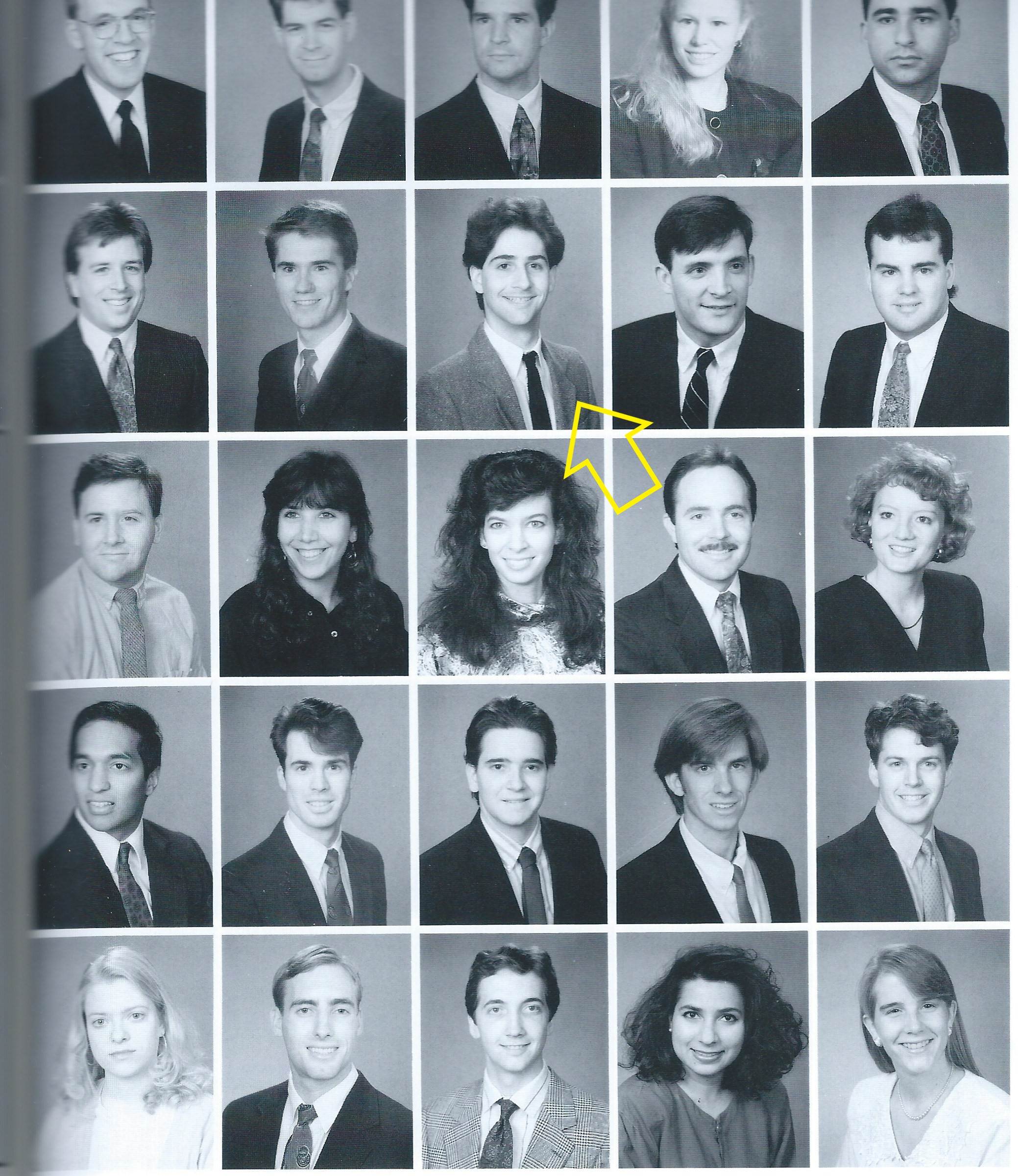
I can't recall my roommate from my penultimate undergraduate quarter, probably because I didn't do much in the dorm room but study and sleep - in addition to taking five tech-heavy classes, I worked as a teaching assistant and played in the orchestra. My substantial workload forced some time-management compromises.
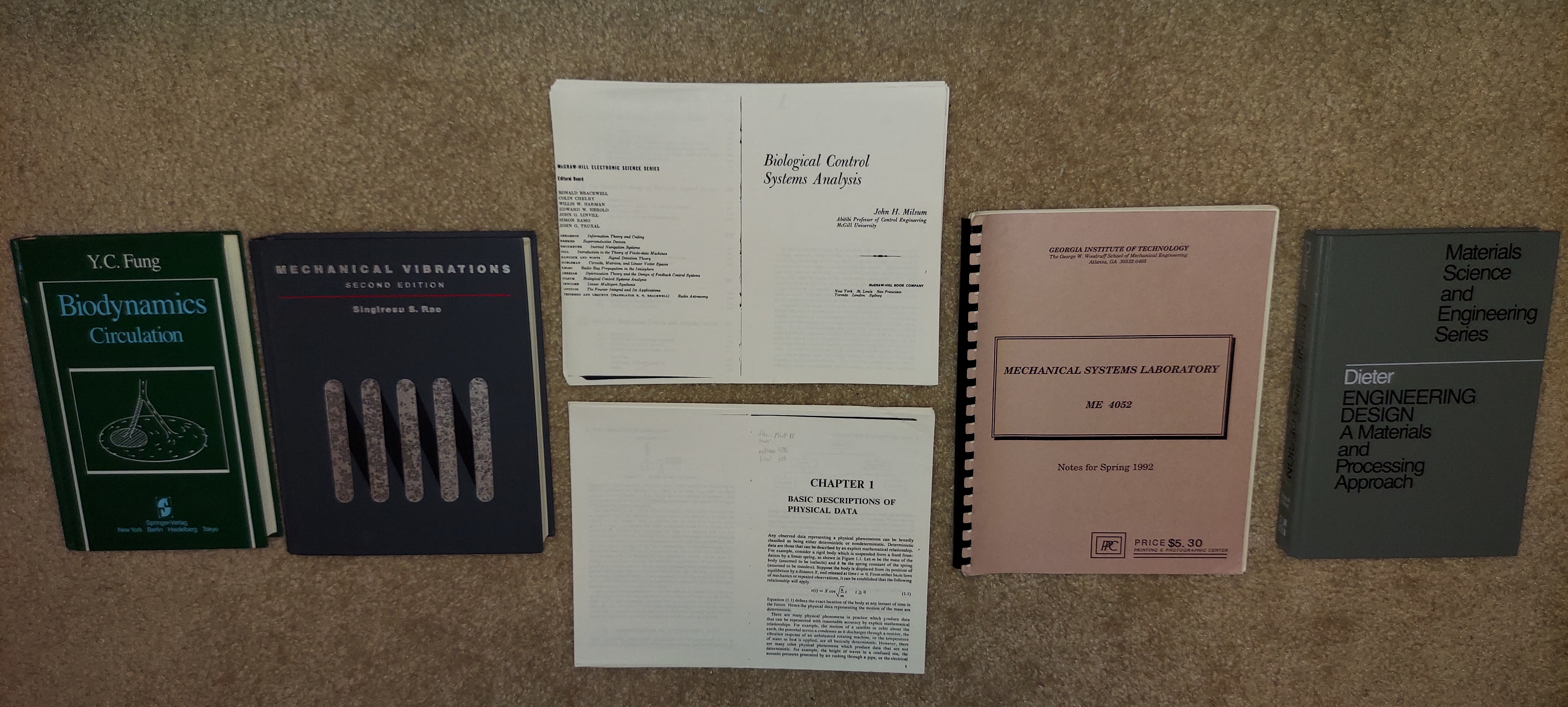
Below are my texts for Introduction to Biofluid Dynamics, Structural Vibrations, Biosystems Analysis, Mechanical Systems Laboratory, and Mechanical Design Engineering. A big component of the Biofluids class was a research paper and related oral presentation. The person I was partnered with had a public speaking phobia, so he volunteered to do the paper if I would do the presentation. Though I'm normally reluctant to cede control, I took the deal so that I could focus energy on my other classes. It sort of worked - the paper ("The Role of Wall Stress in Atherogenesis") was well-written, and my presentation was competent, but during the Q&A the professor (Dr. Bob Nerem, a titan in the field of bioengineering) detected my lack of familiarity with the material, and seemed distinctly unimpressed with me.
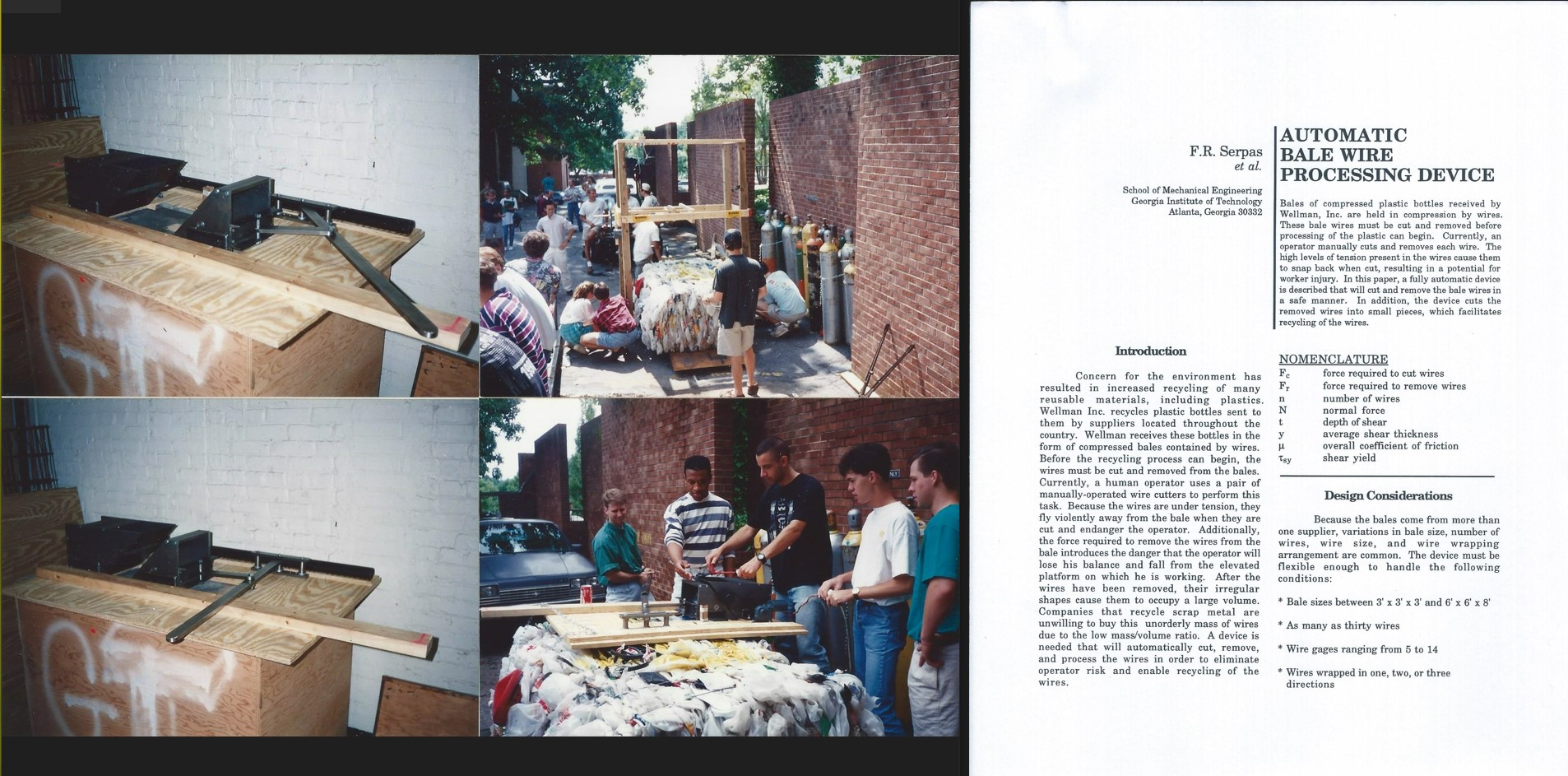
Mechanical Design Engineering was the capstone design project class, in which teams attack a real-world problem submitted by a company. Each team had the same task: designing a means of removing baling wires from cuboids comprising compacted to-be-recycled plastic bottles. The image below contains pictures of our prototype and its use (by my teammates David, Levi, Chris, John, and Courtney) on the day when the teams' designs were put to the test. We didn't build the linkage containing the reciprocating cutting apparatus, but the angled headstock and complementary ram (here actuated by a mechanical lever instead of a hydraulic cylinder) worked as designed - the cut wires were grabbed and removed by a pair of rollers (one in the headstock, one in the ram).
As with Biofluids, I had to be selective with my participation in this class. Though I helped with the conceptual design, I deferred much of my labor to the end of the project, serving as the sole author of the written report. My teammates were apprehensive about completely delegating that task to me, but I came through and did a fine job with the write-up. My capstone design experience prepared me for a future stage of my career - during grad school I served as a teaching assistant in UT's Mechanical Engineering Senior Design Projects Program for a number of semesters.
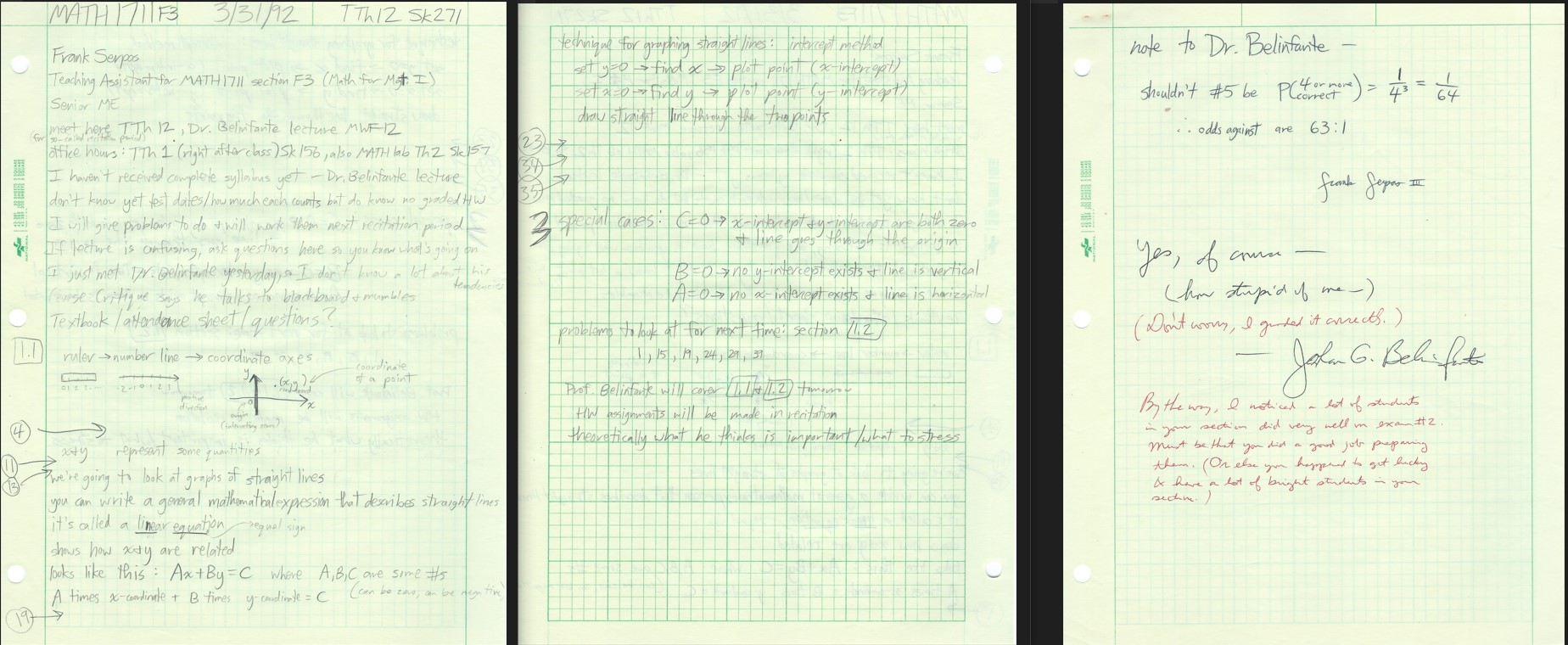
This quarter's teaching assistant assignment was in a different subject: Mathematics for Management I, which was geared toward Tech's relatively-small population of non-engineering students (mostly Architecture and Management majors). Here we see the lesson plan I wrote regarding what to cover during the first class session (held on my 22nd birthday), along with a piece of correspondence with the course's professor. Throughout my three quarters as a TA, I took my teaching responsibilities seriously; that experience prepared me well for my future teaching role during grad school, and I'm confident that my students benefited from my pedagogical effort. Even so, the difficulty of the material meant that my efforts could only go so far: while the grade distribution for this class wasn't bad (1 drop, 4 F, 2 D, 6 C, 9 B, 10 A), the totals for the two Calculus II classes I taught were brutal (4 drop, 8 F, 15 D, 31 C, 10 B, 5 A).
Here's my senior portrait in the 1992 Blueprint yearbook: